Another Scott Sumner recommendation coming in hot here. I grew up in the Home Alone era and have always had a deep love for slapstick. This movie, which I would label as a comedy of errors with a heavy dose of slapstick, moves at a moderate pace without being frantic. It also leans into scenes that might today be considered as going on too long for modern audiences. Many modern viewers may struggle with this one if they lack patience. Also, the style of the penthouse at the hotel is a style I see often in movies from this era, but looks so strange and tawdry.
Category: Uncategorized
-
July Reading List
1. All the Pretty Horses by Cormac McCarthy
Sadly, we lost one of our great writers this year. Blood Meridian is one my favorites of all time, despite the gruesome, blood soaked content. I had always intended to read his borderland trilogy, and used the sad occasion to finally pull the trigger. This is a story of two teenagers who decide to leave their Texas ranches behind and ride into Mexico looking for adventure and fortune. The book is a travel narrative, mixed with intense sequences of action and violence that foreground McCarthy’s beautiful descriptions of the landscape. Must read.
2. A Gentleman in Moscow by Amor Towles
I read Towles Lincoln Highway book last year and loved it. I was told by good authority that this one is even better. The story follows a Russian aristocrat, Count Rostov (a reference to War and Peace, which I am also reading this month), who is put under in a famous hotel in Moscow after the Bolshevik Revolution. Mixed with philosophical speculations, literary references, and scientific metaphors, the book is a master class in mixing heady ideas with deep pathos as we grow attached to Rostov and the people in his orbit.
3. Gulliver’s Travels Jonathan Swift
Over the summer, I like to mix in a few classics. I do this for a few different reasons. First, I like variety. Two, it can often be interesting to look at the world through the eyes of someone who lived hundreds of years ago, looking at their assumptions and how they contrast with mine. And finally, modern syntax and diction is becoming increasingly fragmented and simplified. Complex ideas and thought require complex sentences, winding paragraphs, and more specific word use. This book is a satire of the English world that Swift lived told through travel narrative. The protagonist, a doctor aboard a ship, encounters fantastical worlds that poke fun and deconstruct his world. Good book, but periodically difficult.
4. War and Peace Vol. 1 & 2 by Leo Tolstoy
Some of you might remember that I read Anna Karinina this spring, which was an unparalleled reading experience. War and Peace was waiting in the wings, looming at me, so I tried to use some time off of work in July to plow through. I made it about halfway through the 1200+ pages this month. The translators Richard Pevear and Larissa Volokhonsky have made the Russian sing in English, and I will read anything that they have translated. Both of Tolstoy’s great novels are explorations of human nature and change, but where Anna Karinina was about how a mundane affair affected the world around those involved, War and Peace seems to be about how history affects the individual. I will likely have more concrete thoughts when I finish.
5. These Are the Plunderers: How Private Equity Runs—and Wrecks—America by Gretchen Morgenson and Joshua Rosner
This is another book on my the world is fucked up tour. This book unpacks and breaks open the world of private equity. We are involved in it: many of the largest pension programs and investment groups use private equity to get large returns for their clients. They do this by squeezing the middle class by strip mining businesses and laying off workers at otherwise productive companies. The way it works is that they buy companies and then saddle them with massive amounts of debt, that the companies must pay off with profits, and then they strip mine them for real estate, cut jobs to seemingly raise profitability and then many of these companies go bankrupt. Important read, but endlessly frustrating.
-
Oppenheimer
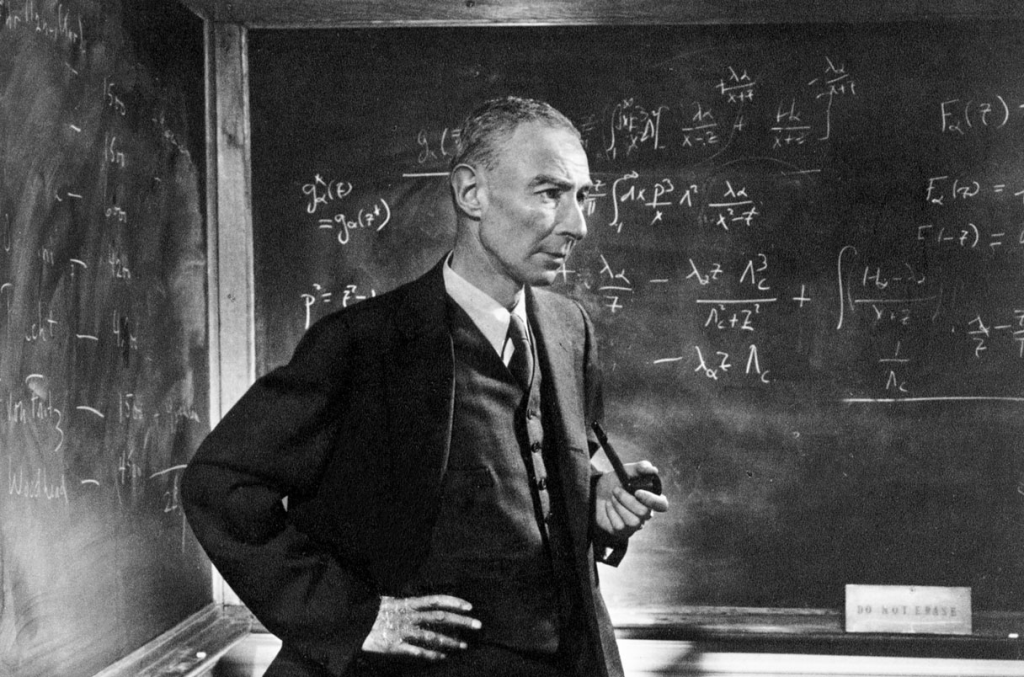
I enjoyed the movie, despite the fact that it was a few movies rolled into one. Wasn’t expecting the melodrama/bureaucracy back biting. I anticipated it be more like The Imitation Game, with Nolan’s love for a pulsing minimalist score, but I still really enjoyed and suspect it will age and likely win a bunch of oscars. Saw it twice, one regular and one IMAX, and can say that beyond the subwoofers, I am not sure it made much a difference. I should probably look more into the film used and how that affects the picture. Now I need to see the Barbie movie…
-
A Matter of Life and Death
A Matter of Life and Death (1946) I watched this movie based on Scott Sumner’s recommendation (who is an economist by day, but does excellent film reviews at his blog). The movie is marvelous and engrossing, and the dated special effects make little to no difference–I will likely rewatch. The plot is simple: a bomber pilot escapes certain death and falls in love with his radio operator, but their love affair is spoiled when an emissary from the afterlife comes to collect him for the next world. He protests and then is faced with a heavenly trial. Highly recommended.
-
Books I’m Excited about Right Now

I am just finishing up this book in preparation for an interview with the author. In my early days as a history major, I had a special interest in urban history: I wanted to understand how cities were made and how they work. Schwarzer is brilliantly written and covers a fascinating history of urban development and disruption. Recommended.
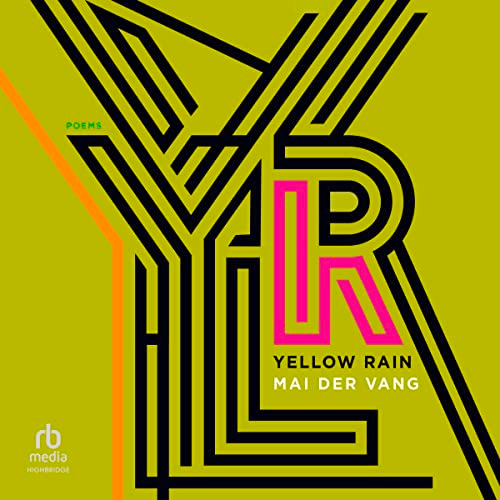
Mai Der Vang is a local poet and professor at Fresno State. I loved her first collection and am now finally getting to her second volume. I learn so much from her and have heard that this book is equally as powerful as her first.
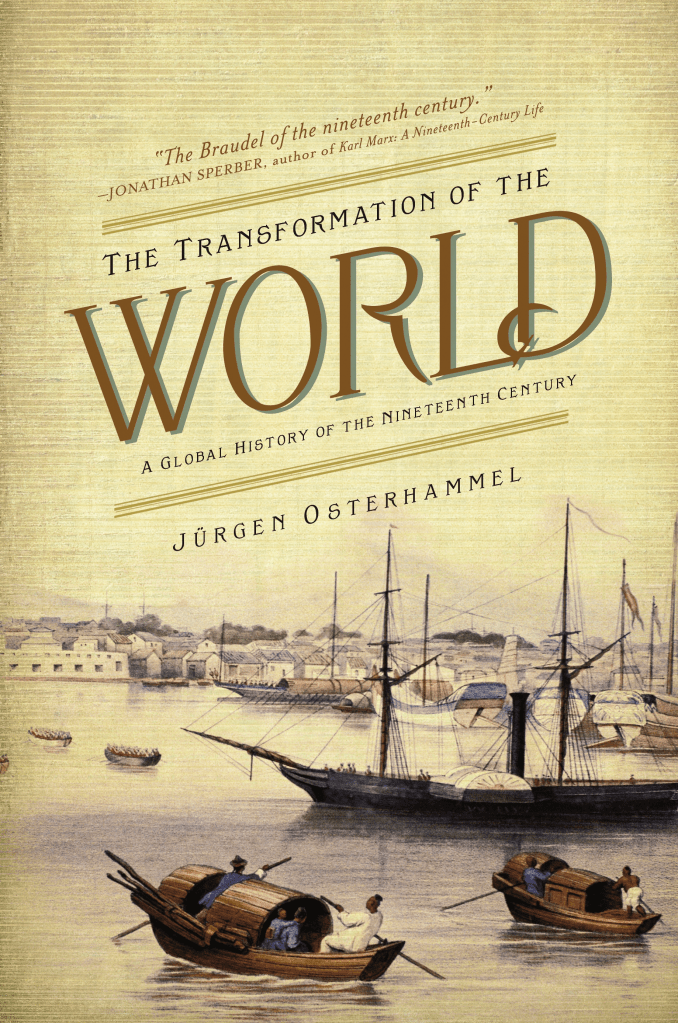
This is not a new book, but fairly recent. Lately, I’ve been trying to slow down and take my time with longer books. This appears, after making way through the first section to be a book of incredible scope and erudition. Looking forward to it and may jump around a bit.
-
Classical Music Dump

Bach: Organ Works, Vol. 4 Masaaki Suzuki
I very much enjoyed this recording, along with the rest of Suzuki’s Bach recordings. Suzuki is the master and brings the metaphysical to these compositions. Here’s the editorial description of this recording:
The fourth volume of Masaaki Suzuki’s Bach works for organ series features one of the most important surviving instruments of Bach’s time, made by the German organ builder Christoph Treutmann the Elder. Widely known for its extraordinary tonal quality, the instrument was built between 1734 and 1737. A recent general restoration preserved all essential structural elements or renewed them, remaining faithful to the originals, making it an ideal instrument for Bach interpreters who wish to come close to the sound ideas of the Leipzig Thomaskantor. Suzuki now takes up the Orgel-Büchlein (literally, ‘little organ book’), a collection of 45 short chorale preludes on melodies from the Lutheran hymn book, a project that came into being in connection with Bach’s appointment as organist and chamber musician at the Duke’s court in Weimar in 1708. Presenting chorales for different periods of the church year, this collection serves as a general guide to text-based composition focusing on specific word-sound relationships and content-specific musical expression. Two Preludes and Fugues complete the first volume dedicated to the Orgel-Büchlein, illustrating the principle of variety and structure historically practised by concert organists in order to demonstrate the tone colours and expressive possibilities of their instrument.
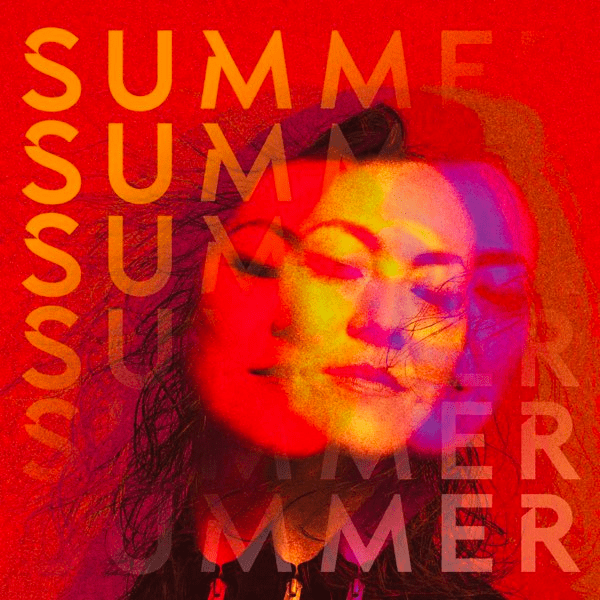
Summer Lavinia Meijer
I really enjoyed this melodic and soothing EP from Meijer, part of a collection of one for each season. This is writing music for me and reflective calm.
-
Agrippina: A Lively Baroque Opera
I just finished watching gloriously raucous 2020 version of this famous opera by Handel performed at the Met, recorded just a few short weeks before the world shut down. When I think of Baroque opera, Monteverdi’s opera L’Orfeo comes to mind, in all its stilted rigidity. The Met reimagined this one with a sense for the tawdry and bawdy—just like we like it!
The NY Times review said it the best:
This “Agrippina” — yanked from ancient Rome into a deliciously bleak vision of our time, played with electric vividness, and starring a guns-blazing Joyce DiDonato — should put to rest, once and for all, the notion that Handel belongs at the Met less than Verdi, Puccini or Wagner. Bold, snicker-out-loud funny, magnetic and unsettling through its power-struggle convolutions, this production musically and dramatically fills the company’s looming proscenium. It’s begging to be enjoyed with a bag of popcorn — or with a martini packing some of the work’s frosty heat.
This is certainly one to check out if you are Opera-curious or skeptical that this art form is for you.
-
June Reading List (A Little Late)
1. What’s Our Problem?: A Self-Help Book for Societies Tim Urban
I’ve been a fan of Urban’s blog for years and loved his Ted Talk on procrastination (it’s probably my favorite Ted Talks of all time). This book is like an expanded version of his blog posts which feature hilarious stick figure cartoons to illustrate his points. The premise is that our society has gone off of the rails, and he comes up with some interesting diagnoses, some more helpful than others. The book is thought-provoking at times and worth reading for some of the mental models and frameworks. Some parts dragged, and I think he perhaps over-emphasized some of his criticisms. Nevertheless, one of the more creative critiques I’ve read in a while.
2. Killers of the Flower Moon: The Osage Murders and the Birth of the FBI David Grann
This one has sat on my bookshelf for years and the release of the trailer for the movie adaptation by Scorcese starring Leo finally pushed me over the edge. It’s a fast read with short, suspenseful staccato chapters. The story is horrifying of course, and is a broader parable about American conquest and complicity. Couldn’t recommend the book more highly, and I wish that I read it earlier.
3. The Myth of Normal: Trauma, Illness, and Healing in a Toxic Culture Gabor Maté
I’ve been working on this for the past few months, digesting chapters at a time. If you don’t know Gabor Maté, he’s becoming a kind of guru in certain niches of the medical community and is a critic of the reductionist biochemical interpretations of disease. Instead, he argues for a more mind-body understanding of illness and tries in the book to create a more holistic view of illness. The book can be a kind of paradigm shifter for a lot of people, myself included, and will alter the way you look at your health.
4. Weather: A Novel Jenny Offill
This one has been on my list to read, and I finished it on a plane to Maui where there isn’t much weather. The book does not really have a plot, but is a series of scenes and hilarious and insightful speculations. The “story” follows a university librarian who has a number of dependent relationships where she plays a caretaker/helper role. In spite of the lack of plot, I plowed through the book and LOL’d many times throughout. Recommended if you are the literary fiction type.
5. The Deep Places: A Memoir of Illness and Discovery Ross Douthat
I’ve been reading Ross for years, starting when he was a blogger at The Atlantic. While he writes primarily about politics and religion (and lately about UAP’s), this is an illness memoir after he contracted Lyme disease. The book is a story about his journey through traditional western medicine and then, after certain walls were hit, non-traditional medicine. As someone that has dealt with a chronic condition, albeit not as debilitating as Lyme disease, I felt myself relating to a lot of what he was describing in his encounters with doctors.
6. The Notebook, The Proof, The Third Lie: Three Novels Agota Kristof
This is a series of three novels, and I am currently halfway through the third. The novels are acclaimed more in Europe than in the states. The recommendation came from Jhumpa Lahiri, who mentioned the novels in passing in a talk she gave. The novels follow twin brothers who are meant to be an allegorical representation of connection and division in Europe. The novels are graphic, describing violence and sexual acts in the starkest, but most minimal prose. Recommended, but not for everyone.
-
May Reading List
1. Outlive: The Science and Art of Longevity Peter Attia
I’d listened to some of Attia’s podcasts before reading this book and have generally viewed him as part of the biohacking community, but this book is much clearer, accessible, and down-to-earth. The basic premise of the book is that we need to transition from Medicine 2.0 where we wait for bad things to happen before addressing our health issues, to Medicine 3.0 where we focus on prevention and increasing health span (the amount of our life that we are healthy and active). One of the interesting concepts in the book is that exercise is much more important than nutrition, which is a kind of 180 from what I understood before: that a healthy diet and moderate exercise was the best and most sustainable way to approach health. Since reading this book, I’ve made two major changes: a pretty dramatic increase in the number of minutes that I exercise each day and the amount of protein that I consume. Ultimately, this may be one of the more important books that you read.
2. Cannery Row John Steinbeck
Before this, the only Steinbeck I’ve read is The Grapes of Wrath, and that was a long time ago. Given the tone and the characters, I’d assumed that this book was written before Grapes of Wrath, but it was actually written six years after. The story is a hilarious mixture of wacky characters that honestly reminded me of 100 Years of Solitude, not quite a magical realism, but a world where reality and the unbelievable teeter back and forth.
3. How Big Things Get Done: The Surprising Factors That Determine the Fate of Every Project, from Home Renovations to Space Exploration and Everything in Between Bent Flyvbjerg and Dan Gardner
I found this book on a blog that I follow called The Enlightened Economist that highlights interesting publications in political economy, business strategy, and history. This book does exactly what it says: it shows how big things get done. The book, hilariously enough, starts with the California High Speed Rail project as an example of how these kinds of projects can break down and go awry. Probably the most impactful lesson for me was the inside and outside view of projects: for those creating something, we see our project as unique, and those on the outside are better able to see its similarity to other, comparable projects. By trying to take the outside view, we can learn lessons from their implementation and avoid pitfalls. If you work in the world of project management or just have something big you need to get done, this book is invaluable.
4. Chip War: The Fight for the World’s Most Critical Technology Chris Miller
This book has been on my reading list for a while now, but listening to Ezra Klein interview him on his show pushed me over the edge. The book essentially gives the history of semiconductor research and development, the political context that it emerged from, and how interdependence is being weaponized in the 21st century. There is so much in this book about how the world works: how fragile some of the supply chains and manufacturers’ operations are and how dependent the world is on chips. If you want to understand how the modern world works, this book is indispensable.
5. The World for Sale: Money, Power, and the Traders Who Barter the Earth’s Resources Javier Blas and Jack Farchy
This is another one of those books that successfully explicates how the world really works. My first, and hilarious, exposure to commodity traders was the Disney movie Jungle to Jungle with Tim Allen and Martin Short. The plot of the movie involved Allen and Short attempting to “short” coffee beans. I don’t think futures are discussed in the movie, but in reality they would likely have been used to leverage their bet on coffee prices. Commodity traders are exactly what they sound like: trading groups that buy goods like grain, coffee, oil, or aluminum at a potentially lower price to sell them at a potentially higher price. That’s the simple version. In reality, commodity traders work in the shadows with unstable governments to find buyers for their goods and take a cut. Every time there was a supply chain breakdown due to world events or political instability, commodity traders were there to “help out” and make hundreds of millions of dollars. These are the billionaires whose names you don’t know and would regularly use things like bribes or international water’s legal neutrality to get what they wanted. Fascinating read.
6. Poverty, by America Matthew Desmond
Desmond’s previous book Eviction was a fascinating look at the world of low-income housing and the eviction process’ effect on people. In this book, Desmond widens the lens to look at poverty in general and how all of us (meaning literally everybody else) profits from it. This book is both incredibly convicting and frustrating. One example is block grants, which are supposed to be used to help low-income families. The federal government gives these block grants to states who then can determine how to use the funds according to the specific needs of the region. Naturally, when you give states free reign in choosing how to spend this money, you get situations where states will use the money to, for example, fund Christian summer camps or pay Brett Favre a million dollars to speak. Perhaps even worse, many states just will let the money sit, holding onto hundreds of millions of dollars that can move children out of poverty. But it’s not just governments that are a part of the problem, we also benefit and maintain this system of exploitation. Mortgage interest deductions are one of the biggest tax breaks, and most of the families that benefit from them are not in need. I had no idea that the cost of the mortgage interest deductions are four times the size of the amount of money that is spent on low-income housing. This is one of those books that will leave you angry, guilty, and overwhelmed by the challenges. But it is not completely without hope. Those who benefit from low wages, and consequently cheap goods, mortgage interest deductions, and increasing home values through the constriction of the housing supply need to be the ones to advocate: meaning, we need to be the ones to volunteer to give things for the sake of the rising tide.
-
April Reading List
1. A Carnival of Losses: Notes Nearing Ninety Donald Hall
Hall is a poet first and prose stylist second, but I honestly I love both forms of his writing equally. Hall’s writing in this volume is considerably darker than the previous collection that I read (Essays After Eighty), but there are also moments of bright transcendence and literary gossip that make it worth the price of admission. The vulnerability in this collection about his bodily functions and needs are startling and touching in turn. I hope we could get a third collection as he approaches centenarian status.
2. Hotel Du Lac: A Novel Anita Brookner
This is my first Brookner novel, and I am both annoyed that I am just now discovering her writing, but also excited that I have such an extensive bibliography to work through now. Brookner is a writer’s writer; I would constantly catch myself losing track of the narrative because I would get lost in the beautifully intricate syntax and diction. The story is about a reclusive writer who absconds to a Hotel in the mountains of Europe to escape relationship drama in London and meets a strange cast of characters, one of which offers a life changing proposition.
3. An American Sickness : How Healthcare Became Big Business and How You Can Take It Back Elisabeth Rosenthal
This may be one of the most disturbing books I have ever read. Rosenthal, a Harvard trained physician and a former NY Times reporter, documents in excruciating and horrifying detail how patients are sacrificed for profits by almost every stakeholder in the healthcare industry. From patent ploys to facility fees to five hundred dollar screws, pricing is not only not regulated, it is used to bankrupt poor Americans across our country. One of the most disturbing things I learned from the book was that the passing of the ACA forced insurance companies to use a larger percentage of insurers premiums on patient care in response to insurance companies’ pattern of spending less and less on patient care and more and more administrative costs (read executive salaries). Insurance companies then began to greenlight more and more expensive treatments in order to raise everyone’s premiums in order to make the pie bigger even though their percentage is smaller. If it sounds a bit convoluted, it’s because it is and that’s the way they want it to be: If we can’t understand it, then it makes it that much harder to push back and advocate for change.
4. The Origins of You: How Breaking Family Patterns Can Liberate the Way We Live and Love Vienna Pharaon
This book shows how family dynamics and patterns continue into our adult lives and create dysfunction in our adult relationships. She covers a few common wounds and how those manifest in maladaptive behaviors. The truth is that we all have wounds and if we leave unaddressed they will continue to make your life difficult. Nothing replaces working things through with a licensed therapist of course, but this book could be a way a first step in at least identifying where you need support.
 Jordan Mattox