BBC’s radio program and podcast, In Our Time, aired a wonderful retrospective on the career and legacy of the influential director Fritz Lang (link here). Lang began his career in the silent period of film in Germany, but escaped or departed when the Nazis came to power and after he met and listened to Joseph Goebbels give a speech or two. After he left Germany, Lang had a prolific career in Hollywood where he made some of my favorite noir films. My favorite Lang are a mix of the silent era stuff, which is usually regarded more highly by the film snob types, and they are mostly not wrong, and then his later stuff like, my favorite, The Big Heat. If you have the stomach for silent, I think you should start with M, Metropolis, and then work your way through the Dr. Marbuse trilogy.
Category: Uncategorized
-
A Raisin in the Sun
I read Lorraine Hansberry’s masterpiece for the first time this December and watched a wonderful PBS documentary. Both just wetted my tastebuds for more. So I was excited to discover that Charles J. Shields, who wrote a wonderful biography of Harper Lee, has a biography of the playwright coming out this month:
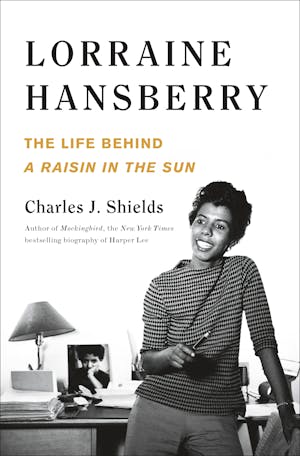
I do think that Hansberry’s play should be something that high school students read. Many of themes covered in the play are issues that are just as relevant today as they were in the 50s and 60s.
-
December Reading List
1. Abe: Abraham Lincoln in His Times David S. Reynolds
Do we need another book on Lincoln? Probably not, but I am so glad that Reynolds chose to write this masterpiece nonetheless. What makes this book distinct from the library of biographies on Lincoln is that Reynolds approaches Lincoln’s story by putting his actions and beliefs in their cultural context. We need more biographies like this to show us that many of these “great men” were really products of their times and that their ideas were created by movements and less as achievements of individual genius.
2. How the Word is Passed Clint SmithSmith is an acclaimed poet and has written one of my favorite books on race in America. This is a kind of travel book where Smith visits plantations, museums, and graveyards to document and unpack how the story of slavery is told in America. There are so many poignant moments in this book, it would be impossible to capture it in my little blurb. Just read it.
3. On Juneteenth Annette Gordon-ReedGordon-Reed is an award winning Harvard historian who I know for her work on the relationship between Sally Hemmings and Thomas Jefferson. This book is a collection of essays on different subjects centered on Juneteenth and her experience of race in Texas. I learned a lot from this book and think it’s a valuable resource.
4. Levels of the Game John McPheeMcPhee is one of our great living journalistic writers. His books can be dense as he tends to relish the detail. I am still working on his tome on geology. This is a short account of a famous tennis match between Arthur Ashe and Clark Graebner. This book is pointed to as the beginning of modern sports journalism. Not my favorite McPhee, but transcendent at moments.
5. No One Is Talking About This Patricia LockwoodLockwood may be the funniest writers I’ve ever read. This book is strange, often transcendent, darkly hilarious, and stretches the bounds of what we understand a novel to be. The novel has two parts: the first half, which is a punctuated series of observations about the world of the internet, and the second half which narrates a family tragedy. Sounds strange, but may be one of the seminal works that marks a major transition in literature fifty years from now.
6. A Raisin in the Sun Lorraine HansberryI recently watched a wonderful documentary of Hansberry’s short and impactful life. She is far less known than her male contemporaries, but played a large role in the civil rights movement and her play had a huge impact during her time. The play follows the story of a family that is wrestling with what to do with an insurance check after the patriarch of the family passes away. The dialogue is sparkling and jumps off the page. This may be one of my favorite modern plays.
-
Picking the Best Books
They pick ten each year, and I’ve read three and working on a fourth. Reading the comments section was a fascinating exercise in watching people not listen. While I admit these would not be my top ten, picking a top ten from all books is a fraught exercise anyway. And of course the people complaining are the ones most likely to benefit from reading the recommended books.
I am watching this same activity in a group on Facebook. I follow a group called Serious Non Fiction. Most of the time spent in the comments is not discussing the ideas of the book, but policing the definition of serious, drawing and redrawing lines.
Probably the biggest problem here is that no one is actually reading these books. Maybe in the future, we will just read titles and debate the merits of the jacket cover description and stop reading books entirely. Seems likely.
-
Classical Music Declining
I’ve been following the comments to a post by Tyler Cowen answering a question about the supposed decline of classical music. Here’s the original post:
I would offer a few hypotheses:
1. The advent of musical recording favored musical forms that allow for the direct communication of personality. Mozart is mediated by sheet music, but the Rolling Stones are on record and the radio and now streaming. You actually get “Mick Jagger,” and most listeners prefer this to a bunch of quarter notes. So a lot of energy left the forms of music that are communicated through more abstract means, such as musical notation, and leapt into personality-specific musics.
1b. Eras have aesthetic centers of gravity. So pushing a lot of talent in one direction does discourage some other directions from developing fully. Dylan didn’t just pull people into folk, he pulled them away from trying to be the next Pat Boone.
2. Electrification favored a variety of musical styles that are not “classical” or even “contemporary classical,” with apologies to Glenn Branca.
3. The two World Wars ripped out the birthplaces of so much wonderful European culture. It is not only classical music that suffered, but also European science, letters, entrepreneurship, and much more.
4. It is tough to top Bach, Mozart, Beethoven, etc., so eventually creators struck out in new directions. And precisely because of the less abstract, more personality-laden nature of popular music, it is harder to have a very long career and attain the status of a true titan. The Rolling Stones ran out of steam forty (?) years ago, but Bach could have kept on writing fugues, had he lived longer. More recent musical times thus have many creators who are smaller in overall stature, even though the total of wonderful music has stayed very high.
5. Contemporary classical music (NB: not the best term, for one thing much of it is no longer contemporary) is much better than most people realize. Much of it is designed for peers, and intended to be experienced live. In the last decade I saw performances of Glass’s Satyagraha, Golijov’s St. Marc Passion, Boulez’s Le Marteau (at IRCAM), and Stockhausen’s Mantra, and it was all pretty amazing. I doubt if those same pieces are very effective on streaming. It may be unfortunate, but due to incentives emanating from peers, most non-peer listeners do not have the proper dimensionality of listening experience to proper appreciate those compositions. To be clear, for the most part I don’t either, not living down here in northern Virginia, but at times I can overcome this (mostly through travel) and in any case I am aware of the phenomenon. For these same reasons, it is wrong to think those works will have significantly higher reputations 50 or 100 years from now — some of them are already fairly old!
I don’t agree with #4 and whole heartedly agree with #5. I think for the most part there are historical reasons why we believe that the best behind us in terms of music. But I also think people today enjoy music less and less as stand alone activity and something you do while doing other things (i.e. cooking dinner, studying, etc.). In the vein, simpler and more pleasurable music is rewarded.
-
November Reading List
1. The Mercy Philip Levine
I am making my way methodically through the work of Levine. The more I read him and the older I get, the more I can see the beauty in his descriptions of factories and small town life. Most of all, what comes through is his empathy. He has tremendous empathy for people and places that are often overlooked. I also really enjoyed some of the jazz themed poems in this collection.
2. Waiting for the Last Bus Richard Holloway
I am just discovering Holloway and have already started another book by him as I finished this one. This may be the best book that I’ve read on death. Most books on death focus on grief, written to people dealing with loss. This book is for the living to help us think about and conceptualize death, something that we probably don’t do enough of. While Holloway is religious, he’s the best kind: not pushy and honest about what he doesn’t know.
3. The Purpose of Power Alicia GarzaGarza is one of the founders of the Black Lives Matter organization and an experienced community organizer. This book is part political treatise and part memoir. The story is a fascinating and insightful case study for thinking about how to organize in the 21st century. She offers some wisdom about the role and limitations of social media in political organizing. The most successful parts of this book are the memoir sections.
4. Northanger Abbey Jane Austen
I’ve read a few of Austen’s works (Pride and Prejudice, Sense and Sensibility, and Emma), but hadn’t read this one. It’s a story that involves a romantic young woman, marriage manuevaring, a gothic abbey, and even a potential murder. Not my favorite of Austen’s novels, but it has its moments. I am rereading Sense and Sensibility next. In preparation for my first trip to the homeland (UK next summer), I am reading a lot of British and Victorian fiction.
5. Robinson Jeffers: Poet of California James KarmanJeffers is a giant in California poetry and someone that is perpetually misunderstood. I’ve read some of his poetry and, like many people, have had a hard time getting into it, particularly his longer stuff. In addition to the length, the content of his poetry can also be a turn off for people: his poetry can be graphic and violent. This biography is the type of book that I wish there were more of in the world: sub 200 page biographies that are tightly written and do not get bogged down in the details. For some people, 200 pages is enough. Some people do require long biographies and I might be open to a longer biography of Jeffers. But it’s nice to have the choice.
-
Fanfare Magazine
I recently discovered and subscribed to this amazing magazine. My favorite features are the album reviews and want lists. I’ve long subscribed to Gramophone Magazine, but have been disappointed with the depth of the reviews. Fanfare is the magazine for classical music nerds who are looking for depth and quality.
Here are a few my discoveries so far:
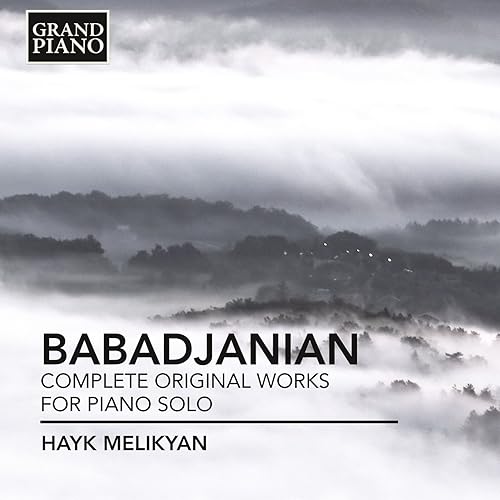
I’ve really enjoyed this collection, and particularly the “Six Kartin.”
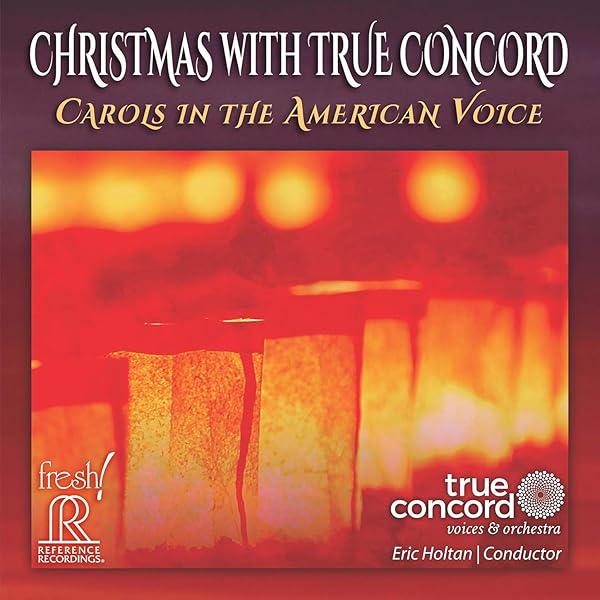
This one will be on repeat this holiday season. Some of the most beautiful vocal performances of classic choral holiday music that I’ve heard.
-
October Reading List
1. My Brilliant Friend Elena Ferrante This one, the first in a series referred to as the Neopolitan quartet, has been sitting on my shelf for a year or so now. I had heard that this series of books is one of the great works of modern fiction and, at least for this first opening salvo, the work lived up to the highest recommendations. This opening work is the story of two friend’s relationship in southern Italy, watching them grow up and apart in love, education, and family. The writing is beautiful and propulsive. I cannot wait to start the second one.
2. The Tyranny of Merit Michael J. Sandel I’ve wanted to get through this book for a while now, and finally got the audiobook. Sandel teaches the famous Justice class at Harvard. His work never really interested me, but this book had been recommended to me by multiple people, so I finally gave in. Sandel attacks the system of merit and the growing educational divide in the US that in part led to Trump. Probably the strongest and most interesting argument is that the system of merit makes those who are not successful feel personally responsible for their outcome as opposed to a system that arbitrarily rewards certain industries, as opposed to an aristocratic system that, despite its injustice, at least gives people a more accurate picture that success, or lack thereof, is less to do with effort than the arbitrariness of genetics and environment. Fascinating read. Recommended.
3. The Last Best Hope George Packer Packer wrote this long essay during the pandemic about inequality, COVID, and the way forward. I’ve liked Packer’s work and this feels like a continuation of things he’s written before for the New Yorker. But, to be honest, I thought it was just a little trite and a lot of the themes that he explores feel a bit recycled. I do think his prognosis that inequality made our COVID situation worse is accurate.
4. The Right to Sex Amia Srivivasan This book is being heralded as the new feminist tome of the 21st century and the book certainly has its high points. The sections on porn and “fuckabilty” were interesting. But really it’s the work on intersectionality that was most poignant and the challenge to the predominately white and upper middle class feminists that have controlled the discourse so long. Fascinating read and must read if you are interested in these issues (let’s be honest, we all should be).5. Saga Volumes 2-5, Brian K Vaughan and Fiona StaplesI am continuing this series and enjoying it more and more as I go along. I’ve really enjoyed the art, the creativity, and the messaging so far. My only critique is that the number of subplots can often leave you confused as to where you left off and what you are jumping into. I should have it finished by next month and have some kind of summative assessment.
-
Joaquin Miller and Minnie Myrtle

In doing research for my next episode on the poet Joaquin Miller, I had the opportunity to meet the fascinating poet Minnie Myrtle. I leave off the Miller from her name given Miller absenteeism. Discovering forgotten poets like Myrtle is one of my great joys. In the episode on Miller, there was not time to post some of her poetry, so I am doing that here:
To the Poet Laborer
Your muse is sunny-faced and sweet,
….She meets you in the fairest nooks
Sequestered in some dim retreat,
….She reads with you from Nature’s books.
Her soft, magnetic thrill you feel,
….You love her presence, and she woos
Your languid moods but to reveal
….The soul of Nature’s veiled truths.
So mute and silent is her way
….The coarser mind can never heed,
She pleads with you to stay and stay
….And Nature’s subtle page to read.
To gather up the trifles sweet
….The busier eye can never see
And make the broken chains complete
….That link “finite infinity;”
The struggling mosses of the sod
….The weeds that vex the earth and curse
To hold them up and call them God
….The primal of the universe;
To probe the dreamy mystery wrought
….By insects rearing coral bars,
Then reach up with thy poet-thought
….And read the lives of all the stars;
To teach the weary, weary heart
….To rest and drink life’s sweetness in,
To draw the flimsy veil apart
….That shrouds the Beautiful in Sin.
She bids you lay your toil aside
….And gladly bear her magic wand,
And in her dreamy realms abide
….Till the dull world shall understand.
And little waifs that float unseen,
….Brushed by the careless hand away
Shall settle, wooed, in peace serene
….Upon the soul of man, and stay.My muse, less kind, or more discreet,
….Deigns not my lonely steps to guide,
And never dares with me to meet
….Except with one or more beside.
She sent me forth amid the throng
….To toil, to trust and be betrayed,
To war with poverty and wrong,
….To hate, defy and be dismayed.
I heard love’s snow-white story, pale
….With sweet delights and blissful fear,
And the dear lips that told the tale
….Turned coldly from me with a sneer;
My holy faith was rudely slain
….In doubt, and clamor and distrust,
In sobs and darkness and in pain
….I saw it buried in the dust.
My dreams of fame—she hid them all
….Like corpses in lone graves at rest,
Amid the crowd I saw them fall,
….Amid the scornful laugh and jest.
For one sweet drop of bliss I plead
….With all the tintless dews and myrrh,
“Love hath a balm for thee,” she said,
….“But Sorrow is her messenger.”She sets my face towards the west,
….Still pointing with her purple finger
Where suns are set in wild unrest
….And sable clouds do mourn and linger,
She haunts me when my soul is sad
….And bitter, filled with stings and wrongs,
She taunts me till my spirit’s mad
….And madness breathes in all my songs.
I hear the moan of dull, sad seas
….That cannot fall on other ears,
And if my lays seem phantasies
….And sneers too often rhyme with tears;
If in my songs the eagle’s shriek
….Doth hush the peaceful, cooing dove,
Still bear in mind I sing and seek
….The wayward truth of human love.
And deem my thoughts but atoms thrown
….From the new Faith that softly gleams
Far off in truth’s dim, chaos-dawn
….And in the dust of early dreams.
We have full time; “there is no death,”
….No need of toil or doubt or tears;
While I unfold a hidden faith
….Tell thou the mystery of the spheres.
-
September Reading List
1. Daniel Barenboim, Music Quickens Time Barenboim is one of our great living conductors and pianists. Recently, he’s come out with some amazing recordings of Beethoven’s piano sonatas that have been on repeat in my home. Really anything he does is worth paying attention to. This book is a philosophical treatise of sorts about how he understands music’s power and how to listen with purposefulness. Fascinating throughout.
2. Tim Harford, The Data Detective I generally read most things that Tim Harford writes. For me, he writes more research heavy versions of Malcolm Gladwell books. This book gives you 10 rules for how to approach data and ways to avoid misuse of data. Some of these chapters didn’t need to be chapters (maybe a couple pages instead), but overall the book was a good overview of how to deconstruct data and interrogate suspicious data.
3. Caroline Criado Perez, Invisible Women This will be on my best and most impactful books of the year. Perez does an amazing job of elucidating how the lack of data on women harms women every day. The anecdotes are fascinating and convicting, and if you are not a feminist after reading this book, you might just not be listening.
4. Alison Bechdel, The Secret to Superhuman Strength Alison Bechdel I loved, loved, loved Bechdel’s graphic novel Fun Home which came out a while ago and was made into a broadway show. This graphic novel explores Bechdel’s relationship with physical activity, exercise, the body, and much more. There is so much here and so many moments of beauty. A little hard to describe as it seems to wind around a few topic. The body stands at the center. Recommended.
5. Brian K Vaughan and Fiona Staples, Saga Vol. 1 I loved Vaughan’s series Y: The Last Man, which is a Hulu series now, and this series was on my list to read. Anything that Brian K. Vaughn does is worth picking up and this is more of the same. It follows two “aliens” of different species who are at war with each who also happen to fall in love in a prison facility. I’m only through the first volume, but I love it so far.
6. Edwidge Danticat, Everything Inside Danticat is a writer that I recently discovered, but I should have been aware of. Most of her stories involve her ancestral Haiti or Haitian immigrants to the US. This was a wonderful collection of stories that explore gender, trauma revolved around natural disasters, and complicated socio-economic experience of these people. I loved this collection and will be reading more of her stuff.7. William Maxwell, So Long, See you Tomorrow Maxwell is one of those great American writers whose name is little known. His name had come up in A.O. Scott’s wonderful essay series on American writers, and so I went headlong into his work. He is more known as an editor of some of our great writers. He was the fiction editor at The New Yorker from 1936 to 1975. This slim novel has a kind of mundane premise: a murder in a small town, but it’s so much more than that. He has a turn of phrase that when its encountered you know you are in the hands of a master.
 Jordan Mattox